OneRail: The Orlando Company Quietly Running Deliveries for Fortune 500 America
Bill Catania passed on Miami and Silicon Valley to build in Orlando — and turned the ugliest problem in shipping into Central Florida’s most valuable software startup
By Brian French | OrlandoBusinessNews.com
Quick Answer: OneRail is an Orlando-headquartered logistics technology company whose software decides, in real time, how a retailer’s order actually gets to your door. Launched in 2018 by husband-and-wife founders Bill and Lisa Catania, the company sells “delivery orchestration”: a single platform that plugs a shipper into a vast web of courier companies and drivers, picks the right vehicle for every order, tracks it live, and steps in with humans when something breaks.
With north of $100 million in venture capital raised, back-to-back appearances on national fastest-growing-company lists, and enterprise clients spanning home improvement, automotive, and food distribution, OneRail has become the strongest argument that Orlando can grow serious software companies — not just theme parks and simulators.
The Founder Who Chose Orlando
Every startup ecosystem needs a proof point, and Central Florida’s is a logistics nerd with a track record. Before OneRail, Bill Catania spent years in retail technology and founded M-Dot Network, a digital-couponing pioneer that Inmar snapped up in 2011. When he and co-founder Lisa Catania started their next venture in 2018, the conventional playbook said relocate to a coastal tech hub. They stayed put.
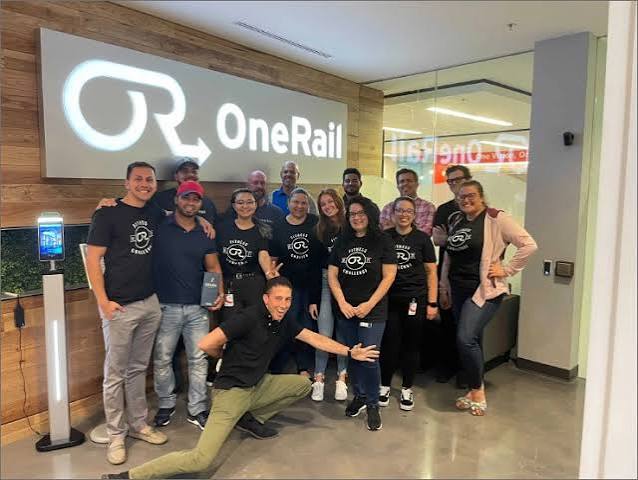
That decision has paid civic dividends. OneRail became downtown Orlando’s marquee startup employer, a magnet for engineering and operations talent that historically left the region, and a fixture at the top of local “companies to watch” lists. When national publications rank America’s fastest-growing private businesses — the Inc. 5000, Deloitte’s Technology Fast 500, Forbes’ best startup employers — OneRail has been Orlando’s recurring entry.
The Problem: Shipping’s Most Expensive Mile
Ask any supply-chain executive where the money bleeds, and they’ll point at the final stretch between warehouse and doorstep. Industry analyses routinely peg the last mile at half or more of total delivery spend. It’s also where customer experience lives or dies: nobody remembers the ocean freight; everybody remembers the couch that showed up three days late with a missing leg.
For a national retailer or distributor, executing that mile means juggling a patchwork of regional couriers, gig fleets, common carriers, and in-house trucks — each with different capabilities, coverage maps, and software. Amazon solved this by spending tens of billions building its own network. Almost nobody else can.
The Product: An Operating System for Deliveries
OneRail’s pitch is that shippers shouldn’t have to build Amazon’s network — they should rent the brain that coordinates one. Its OmniPoint® platform works in three layers:
Decisioning. Every incoming order is scored on dimensions like weight, size, service window, and destination, then routed to the best-fit courier and vehicle class from a connected pool spanning hundreds of delivery companies and millions of drivers. A power tool might ride in a sedan; a water heater gets a liftgate truck.
Visibility. Dispatch, live GPS tracking, notifications, and proof of delivery flow through one dashboard and API, regardless of which courier is driving.
Rescue. OneRail staffs a round-the-clock exceptions team that jumps on failed pickups, breakdowns, and misroutes. In a category where software-only rivals shrug at edge cases, this human layer is a genuine selling point to enterprise buyers with brand reputations on the line.
The model is deliberately asset-light — no OneRail trucks, no OneRail drivers — which means growth compounds through network effects rather than capital expenditure. Each new courier deepens coverage for shippers; each new shipper delivers volume that attracts couriers.
The Money and the Momentum
Venture investors have kept writing checks through a punishing stretch for logistics tech. OneRail’s cumulative funding has climbed past the $100 million mark across rounds through a late-2024 Series D reported around $50 million, with a roster of backers that has included Aliment Capital, Piva Capital, Arsenal Growth, Bullpen Capital, and homegrown fund Florida Funders. Closing a growth round in 2024’s frozen market said more about the company’s economics than any press release could.
Commercially, OneRail has leaned into big-and-bulky and time-critical freight — building materials, appliances, auto parts, food-service distribution, medical supplies — the segments DoorDash-style gig apps can’t credibly serve and where enterprise contracts are sticky. The company has publicly described powering delivery programs for multiple Fortune 500 shippers.
What OneRail Means for Orlando
Central Florida’s business identity has rested on three pillars: hospitality, aerospace and defense simulation, and healthcare. A venture-scale software company changes the math for the whole region — it recycles talent (early employees become future founders), attracts out-of-state capital that then looks at neighboring deals, and gives University of Central Florida graduates a reason to build careers downtown instead of in Austin or Atlanta. If the region gets a signature tech exit this decade — an IPO or a nine-figure-plus acquisition — OneRail is the most credible candidate on the board.
🎯 Brian’s Take
Great businesses often live in problems too ugly for glamour. OneRail picked freight that doesn’t fit in a Prius, married an algorithm to a night-shift ops team, and refused to own a single truck — three unfashionable choices that add up to real defensibility. The Orlando address isn’t a quirk; it’s a cost advantage and a talent-loyalty play in a market where Bay Area burn rates kill companies.
What I’m watching: gross margins as courier costs fluctuate, competitive pressure from project44 and Uber’s enterprise push, and whether the Series D war chest funds profitability or just runway. But the direction of travel is clear — every retailer in America is being forced to promise Amazon-grade delivery, and almost none can build it themselves. Selling them the control tower is a beautiful place to sit. Verdict: Orlando’s best shot at a landmark tech exit, and a company whose boring exterior hides a compounding machine.
Frequently Asked Questions
What is OneRail in simple terms? It’s software that acts as mission control for deliveries — choosing the courier, tracking the driver, and fixing problems — so retailers can offer same-day and scheduled delivery without owning trucks.
Is OneRail an Orlando company? Yes. It was founded in Orlando in 2018 and remains headquartered there.
Who runs OneRail? Co-founder Bill Catania serves as CEO; he founded the company with Lisa Catania.
Can I buy OneRail stock? Not currently — the company is privately held with no public ticker.
How is OneRail different from DoorDash or Roadie? Those are courier networks; OneRail is the orchestration layer above them, routing enterprise freight (including heavy, bulky items) across hundreds of courier companies, with 24/7 human exception management.
How big is OneRail’s delivery network? The company describes a connected network of hundreds of courier partners representing millions of drivers across the U.S.
Company Snapshot: OneRail, Inc.
| Ownership | Private, venture-backed |
| Home Base | Downtown Orlando, Florida |
| Launched | 2018 |
| Founders | Bill Catania (CEO) and Lisa Catania |
| Headcount | Estimated 200–400 |
| Capital Raised | $100M+ through Series D (late 2024) |
| Core Product | OmniPoint® delivery orchestration platform |
| Network Reach | Hundreds of courier partners; millions of drivers |
| Target Sectors | Home improvement, automotive, appliances, food & beverage, medical supply |
| National Honors | Inc. 5000, Deloitte Fast 500, Forbes America’s Best Startup Employers |
Sources & Further Reading
OneRail newsroom and platform documentation (onerail.com); funding histories via Crunchbase and PitchBook; Orlando Business Journal and Orlando Sentinel local coverage; FreightWaves and TechCrunch reporting on last-mile logistics funding; Inc., Deloitte, and Forbes company rankings.
About the Author
Brian French is a technology writer at OrlandoBusinessNews.com, covering Central Florida’s growth companies, founders, and the capital fueling them. His “Brian’s Take” column offers plainspoken analysis of the businesses reshaping the Orlando economy.
© 2026 OrlandoBusinessNews.com. All rights reserved.